UNFa-1


UnFairchild...Extended
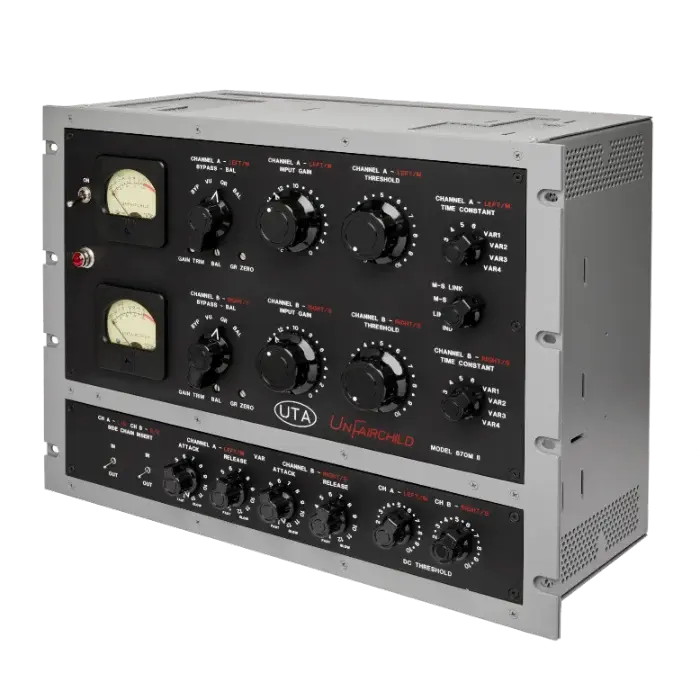
The UNFa-1 Accessory Box is an add-on to the UnFairchild 670M II vari-mu tube compressor/limiter. It adds a whole new world of flexibility and function to the already versatile recreation of the Fairchild circuit.
There were certain features that didn't make sense to have included in the UnFairchild design because it would have strayed too far from the mission of faithfully recreating the original Fairchild circuit. Being outside the boundaries of the original Fairchild circuit doesn't make these new features any less desirable. An optional add on product was and is the perfect solution.
With these added features, UnFairchild users can have an authentic hardware recreation of the legendary vintage musicality of an original Fairchild WITH a level of control and flexibility that many plugins don't even offer. It is truly unfair.
What it does to an UnFairchild
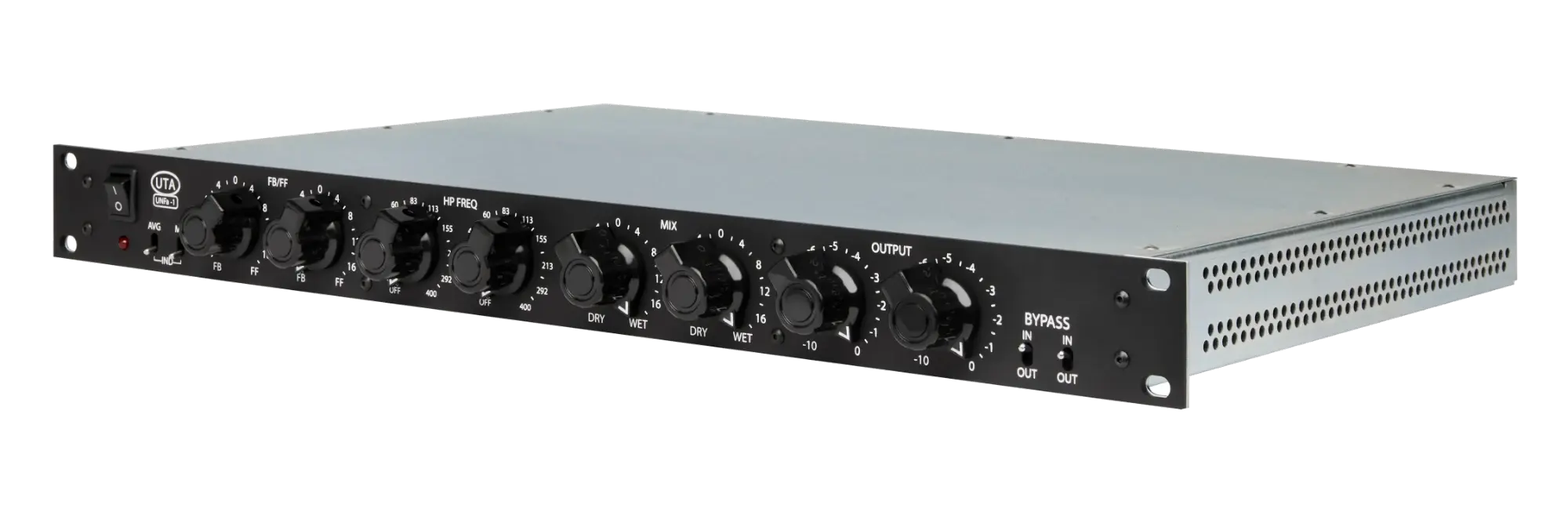
The UNFa-1 works on two things at once. FB/FF, HP FREQ, AVG and M/S change what the UnFairchild's gain reduction circuit hears. MIX and OUTPUT change the audio coming out. The two halves switch in and out separately: the UnFairchild's Side Chain Insert switches control the side-chain half, and the UNFa-1's own BYPASS toggles skip MIX and OUTPUT. Bypass the audio half and you have the original Fairchild audio path with a smarter side chain.
FB/FF: the feature Eric Valentine reaches for most
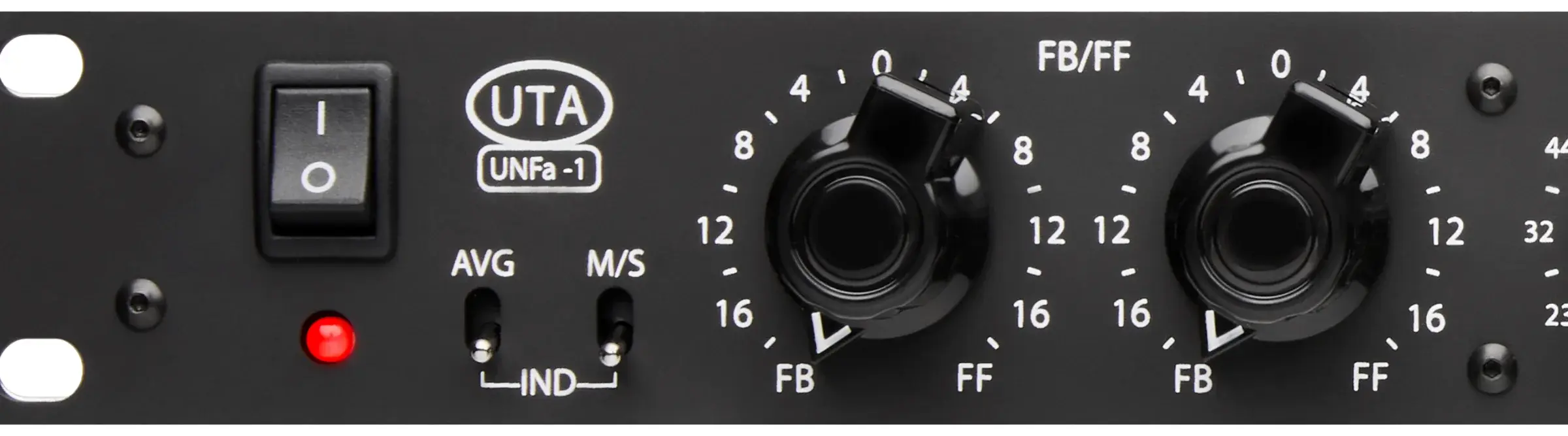
A Fairchild is a feedback compressor: the side chain listens to the output, so as it turns the signal down, it hears less and eases off. That is why it can do enormous amounts of compression and still sound smooth. Feeding the side chain from the input instead (feedforward) is wild and aggressive, but on its own it can over-compress one section and under-compress the next. Eric used to blend the two on his console. The FB/FF knob does it in 2 dB steps.
- Drums: 4 to 8 on the FB side for grabby, aggressive compression that doesn't freak out.
- Mix buss: 12 to 16 on the FB side when you want to hear the compression more.
- Transient designer: 8 to 12 on the FF side, blended back in with MIX.
HP FREQ
Most of the time, when someone patches something into a side chain, it is to stop the low end from driving the compressor. HP FREQ puts that on the front panel: a 12 dB/octave Butterworth high-pass from 23 to 400 Hz on the side chain only. On a drum mix with a big kick, turn it up into the 83 to 113 range until the kick and snare are compressed about equally. On a mix buss it is usually 44 to 60.
MIX
Parallel compression inside the box. Set the UnFairchild extreme, 15 to 20 dB of gain reduction with all the distortion and pumping that brings, start fully wet, then turn toward DRY until the dynamics come back. It sounds different from simply compressing less. The Fairchild circuit rolls off the very top to keep out RF, which shifts the phase of the highs; the UNFa-1 compensates so the dry and compressed signals line up and the blend stays flat.
OUTPUT
The UnFairchild sounds great pushed hard: big, warm harmonic color on vocals, gritty on drums. By then it is loud enough to clip your converter. Turn Input Gain right up, set Threshold for the compression you want, and pad the result down with OUTPUT, 0 to −10 dB in half-dB steps. With GAIN TRIM on the UnFairchild it also lets you match the left and right sides at extreme settings.
AVG and M/S
Most tube compressors link stereo as "loudest channel wins," so hard-panned parts compress about 3 dB more than they sound like they should. AVG sums left and right before the side chain, so the compressor follows the way you actually hear the mix. Eric leaves it on. M/S fixes something the UnFairchild alone can't do: feedforward skips the transformers that do the M-S encoding, so feedforward and M-S never worked together. With M/S up, any blend of FB/FF and HP FREQ works in M-S.
Hooking it up
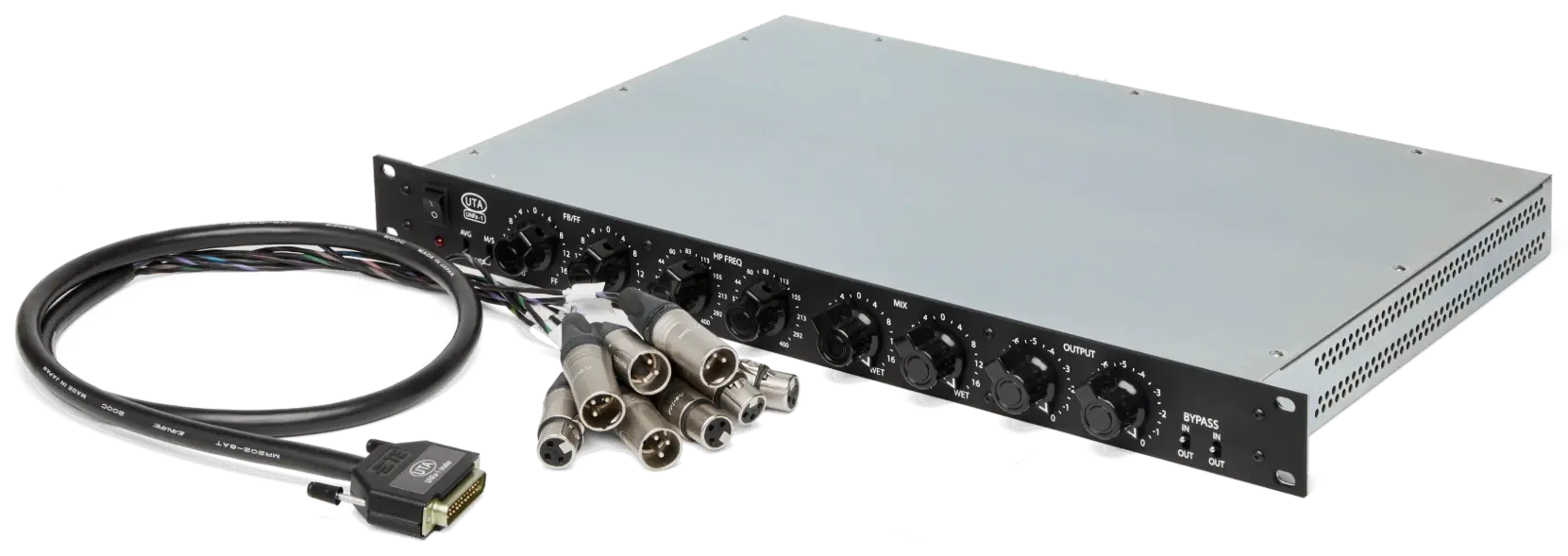
The UNFa-1 comes with a DB25 harness (TASCAM pinout) that breaks out to the UnFairchild's audio inputs, outputs, side chain send and side chain receive. Your signal then goes in and out of the UNFa-1. Bypassed, it is a hard wire straight to the UnFairchild. Leave a 5/8-inch gap between the two in the rack. Both are all-analog, Class A hardware, not plug-ins.
Features
- Wet/Dry Mix (for parallel compression)
- Feedforward/Feedback Mix
- HP Filtering for Sidechain
- Output Gain Control
- Feedforward Compression in M/S modes
- Averaged Stereo Linking
- Included harness for easy plug and play
- All done with high voltage Class A audio circuits to preserve sonic integrity
Watch the video
Eric Valentine talks through the UNFa-1 with Vintage King, then runs a drum loop through it. The overview starts at 20:44 and the drum demo at 36:01.
“But the Unfairchild 670 MII, and the extension UNFa-1 give me more of what I had, and then some.”
“It is by far my favorite of the new features added with the UNFa-1.”